Cancer treatment company NBE Therapeutics has received $20 million of investment from Novo Holdings, adding to previous $20 million series B financing from PPF Capital Partners Fund, Boehringer Ingelheim Venture Fund and others. This closes the series B round at $40 million and brings Novo on as a third major shareholder.
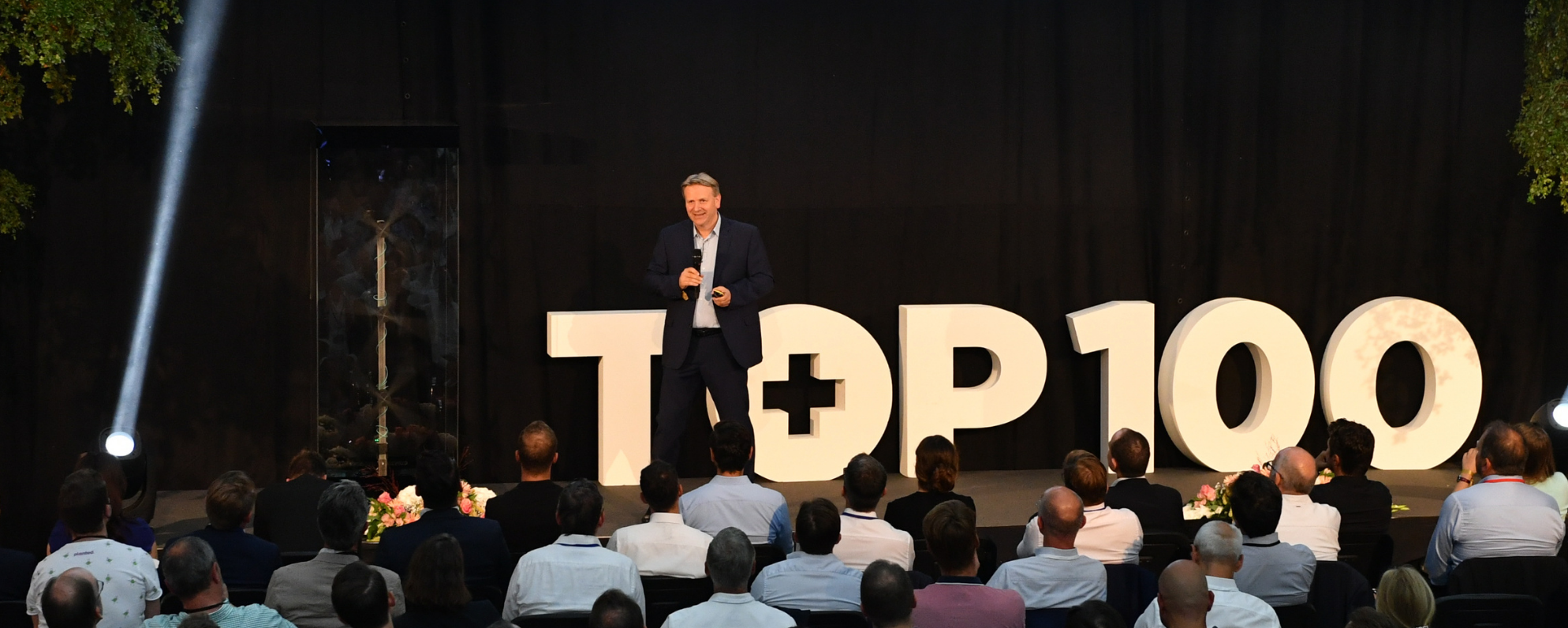
NBE operates in the field of antibody drug conjugates – highly targeted drugs that attack the cancer cells, not healthy tissue – and its offering spans discovery and delivery of antibodies as well as novel toxins. It has been on the TOP 100 list three times, the first time being in 2013, just one year after it was founded.CEO and founder Ulf Grawunder has a long history with Venturelab (with NBE as well as his first startup, 4-Antibody), and took the time to talk to us about his 15-year journey from idea to $40 million financing round.
You took part in a Venturelab program way back at the start of your journey, around 2002. What drove you to seek out entrepreneurship?
I participated in the pre-Venture Leaders program New Entrepreneurs in Technology & Science (NETS), which we could call the “prototype program” for Venture Leaders. A lot of what was done at NETS was/is also done in the Venture Leaders program and many of the same people were involved.
Back in 2002, with a strong academic background, I only had a vague idea that it could be interesting to apply part of my research commercially. However, only the NETS program really showed me that this was not so unrealistic. I was driven into entrepreneurship by the idea that I could develop something transformative for people and patients rather than just for academic publications.
What is your big idea? How has it evolved from inception to now?
At my first company, 4-Antibody, in line with what was fashionable at that time, we tried to develop a superior technology for the development of fully human antibodies that others could use as a basis for developing drug products. This company was in the technology licensing business, not in the drug development business. Over time, I felt that developing drug products would have more of a direct impact on patients and potentially be valued more favorably. When 4-Antibody was sold to Agenus and as I left the organization, I decided to go for it and build a drug development company.
NBE tackles cancer through antibody drug conjugates – highly targeted drugs that attack the cancer cells, not healthy tissue. And your IP includes technology as well as the ADC composition, whereas other companies in this field focus on only part of the ADC whole (eg the toxins, or the antibodies). What is that technology?
Most smaller companies or biotechs only focus on one aspect of ADC development, because these molecules are very complex to manufacture. Our USP is that we have several proprietary technologies allowing us to engineer best-in-class ADCs. This means we have expertise and we can apply our own technologies for ADC development from A to Z (or should I say from “A to C”?). On top of this, our ADCs also trigger strong immune-system activation, resulting in long-lasting and durable anti-tumor immune responses.
What’s the future of cancer treatment? Do you think it will still be such a scary diagnosis in, say, 20 years?
Currently, novel targeted therapies and increasingly immune-system-related targeted therapies are transforming cancer treatment. This includes antibodies (molecules of the immune system), CAR-T cells (cells of the immune system), cancer vaccination approaches (again involving the immune system), and factors that block immune-checkpoint inhibitors (i.e. weapons of cancer cells to suppress an anti-cancer immune response).
Immune oncology is such a hot topic in the industry, because it became clear not only that cancer therapy works best if the immune system is an integral part of the treatment, but indeed, if the immune system is not triggered, then cancer progression will in most cases only be delayed, but not cured.
In future, combinations of all of these novel approaches will be more effective and I am convinced that many cancers will be better manageable, or even curable in many patients. However, cancer is a very heterogeneous disease and there are also very aggressive types of cancer that will remain a challenge.
How did the Venture Leaders trip to Boston in 2003 move your business forward?
It showed me that there was much more of a “just do it” mentality in the U.S. When I saw that many of the very early start-ups in the US were based on not much more than concepts/dreams and visions, but with the firm belief that they would change the world, I thought that we could do this in Europe equally well, and we should have a stronger belief in our abilities to change the world.
You’re now on the Venture Kick jury, helping to identify the next generation of startup success stories. What motivated you to join the jury?
I have profited significantly from the NETS/Venture Leader program, which gave me the “kick” to leave academia and to go into building companies. I would like to help other motivated young talents in Switzerland to make that step, and to let them know that it is possible – and that it is rewarding to take on some risk and accomplish something.