Investments in tech startups increased by 30% in 2022, with a noticeably larger share going to ICT, fintech, and cleantech startups. The Swiss Venture Capital Report 2023—published by startupticker.ch and the investor association SECA, in cooperation with startup.ch—examines the startups and investors that shaped the growth of Switzerland's startup ecosystem last year.
According to the newest edition of the Swiss Venture Capital Report, the growth trend of the Swiss venture capital market persisted: not only has the total amount of investments increased (29.7% YoY) but so has the number of rounds (7.9%), signaling continued interest in Swiss tech startups. Investments almost doubled since 2020 and more than quadrupled since 2017.
More than CHF 2.2 billion went to ICT startups, including fintech innovators, which means that cantons that are home to ICT and fintech startups benefited significantly. The large rounds raised by Wefox and Scandit were particularly notable. Cleantech startups secured CHF 826.9 million, a big share of which went to Climeworks in a massive funding round. In terms of regions, there was a distinct growth of investment in startups based in Geneva and Zug, the report notes, although Zurich and Vaud remained in the lead, as they are home to the ETH Zurich and EPFL respectively.
The report also highlights that there was an increase in exits of young tech startups: while there used to be around 20 to 30 sales per year in the 2010s, Swiss ICT and fintech startups alone accounted for 50 sales last year. With the many successful exits also came an increase in VC fund launches, the majority of which are aiming for an investment volume of more than CHF 100 million.
Switzerland maintains its strong position in Europe
Growing interest rates, inflation, as well a geopolitical instability have dampened the flow of capital in European markets. While 2022 was the second biggest year for European VC activity, there was overall stagnation according to PitchBook's annual European venture report: neither the total value of investments (EUR 91.6 billion) nor the number of rounds (12,383) met 2021's levels.
The UK (EUR 25.2 billion), France (EUR 12.5 billion), and Germany (EUR 12.2 billion) attracted the largest share of investments. Looking at invested venture capital relative to population size, Switzerland ranks third once again, after Estonia and Sweden, whereas the UK, France, and Germany ranked lower in terms of per capita value. In an interview with Venturelab, Ted Persson spoke about the reason Sweden attracts more venture capital than Switzerland.
Although Switzerland is not impervious to the conditions affecting European markets, the venture capital ecosystem has been more resilient and remained relatively dynamic. "It's great to see that Swiss startups were able to raise more capital despite difficult circumstances and the decline of venture capital investments in Europe," said Stefan Steiner, co-managing director at Venturelab. "For 2023, we definitely see that investors are more cautious. Growth investments in particular are becoming more difficult and can take significantly longer than in past years."
A survey of Swiss VCs confirms this as they say 2023 will be challenging but exciting.
Related articles

CHF 2.6 billion for Swiss startups in 2023
read more
Decline in startup investment in H1 2023: CHF 1.2 billion for Swiss startups
read more
Vaud-based startups raised over half a billion in 2022
read more
These venture capital funds have the dry powder to invest in Swiss startups
read more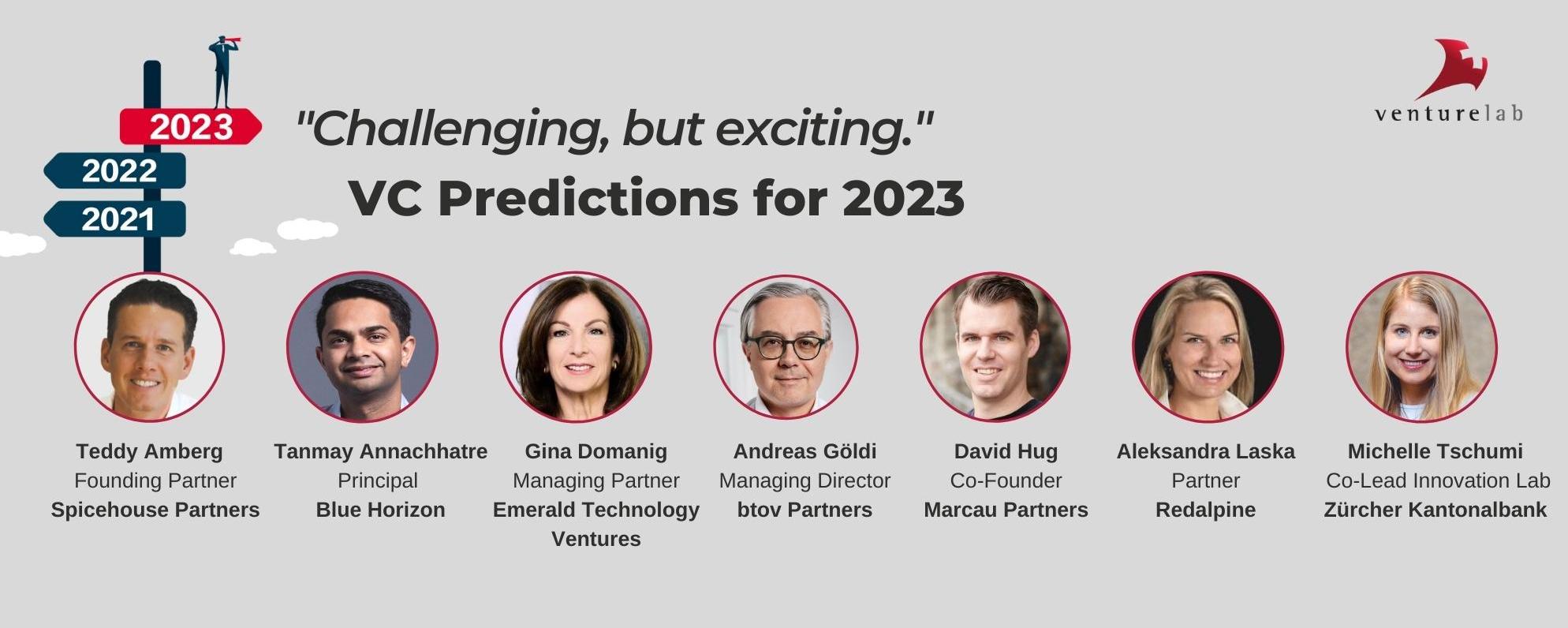
What to expect in 2023, according to Swiss VCs
read more
Exits & IPOs of TOP 100 Swiss Startups since 2021
read more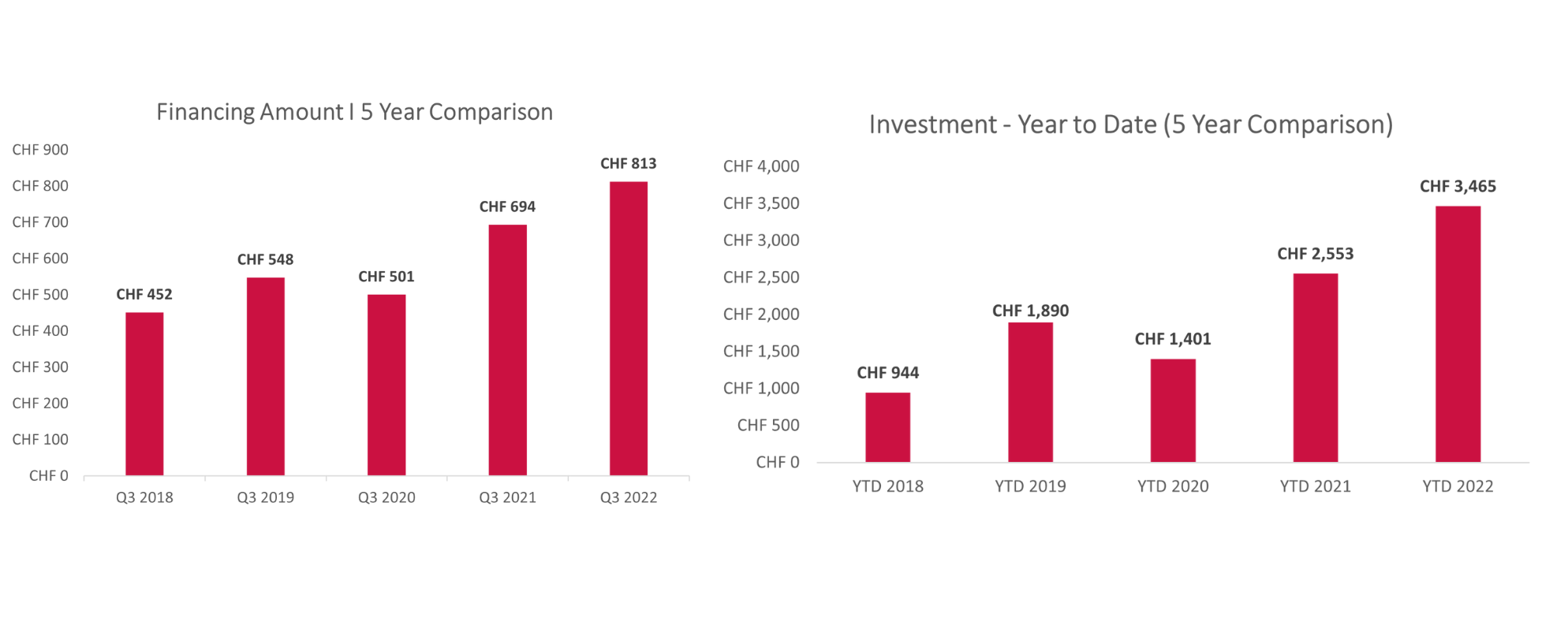
Q3 numbers are in: CHF 3.4 billion invested in Swiss startups in 2022
read more
The TOP 100 Investor Summit 2022 connects international investors with promising startups
read more