


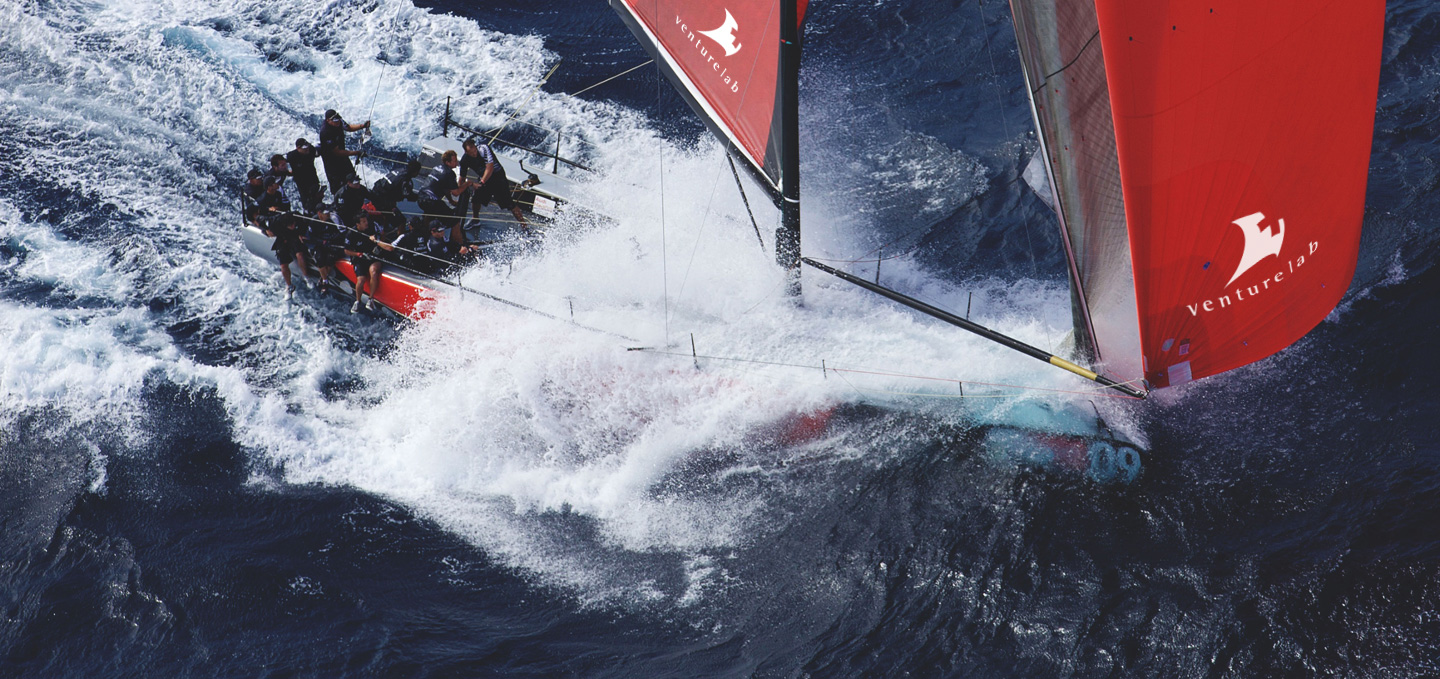
From software developers, to engineers and scientists: the startup and innovation scene is finally becoming more female. Check out the interesting portraits of Nadja Mrosek, Bettina Ernst, Olga Peters and Déborah Heintze.
Nadja Mrosek, CEO of GLYCEMICON - Founded: 2013
TOP 100 Startups: 2013, 2014, 2015, 2016, 2017
‘Setting up a company really appealed to me,’ says Nadja Mrosek. She founded Glycemicon together with four scientists and an experi-enced entrepreneur four years ago. One of the co-founders was Profes-sor Christian Wolfrum from the Laboratory of Translational Nutri-tion
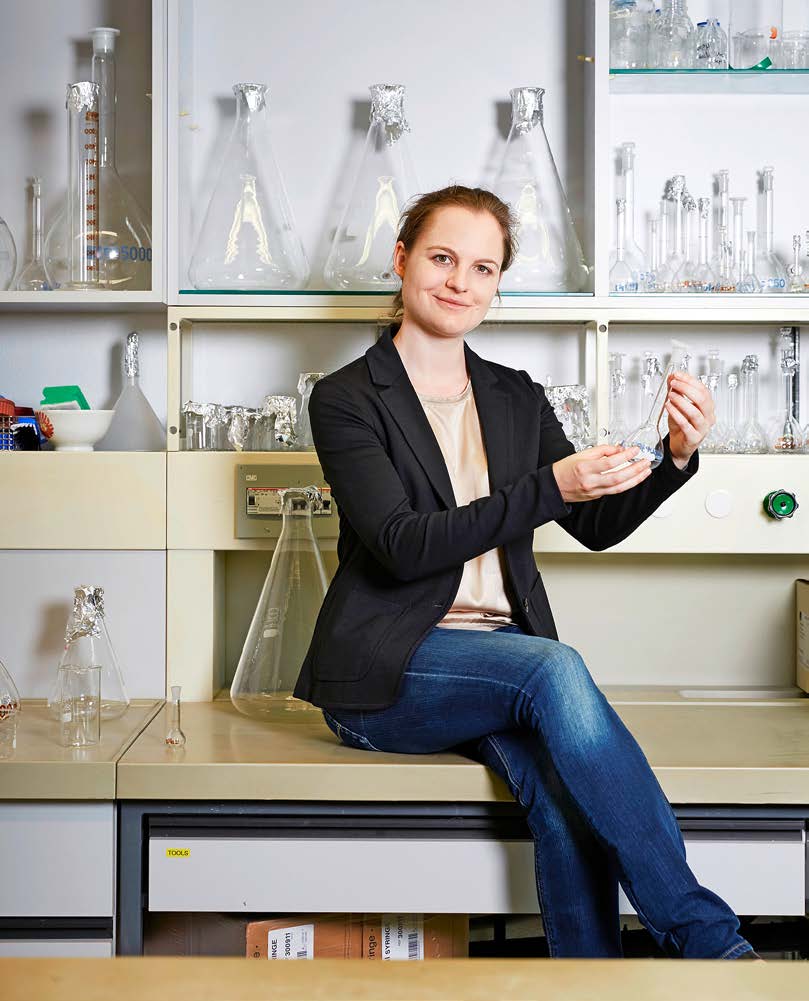
Biology at the ETH Institute of Food, Nutrition and Health, where Mrosek obtained a doctorate after graduating in medicine. The young entrepreneur’s work centred on an anti-diabetic substance that the startup, based at Technopark Aargau, developed into an active ingredient to treat elevated blood sugar levels. ‘I was able to make the transition from scientific work into the business world step by step, ’ says Mrosek. Her plan was always to work in industry rather than in the academic field, and she is doing so now with her own company. The startup project is already at an advanced stage: Mrosek completed a further financing round of more than CHF 3.25 million at the begin-ning of this year, and in total the startup has raised more than CHF 7 million.
Bettina Ernst, CEO of PRECLIN BIOSYSTEMS -
Founded: 2008
Founded: 2008
TOP 100 Startups: 2011, 2012, 2013
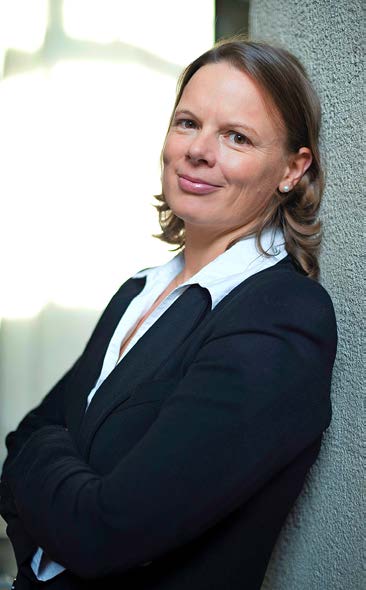
In one sense, it was a straight career in science. Bettina Ernst studied biochemis-try at ETH, obtained her doctorate and worked as a research assistant. But her true passion was sport: she competed as a gymnast at the Olympic Games in Los Angeles and was then among the world’s best triathletes for several years, until she suffered an asthma attack during a competition in the mountains in Kyrgyzstan. She retired from sport and dedicated her-self to science, but she found life as an employed immunologist boring. ‘Forming Preclin Biosystems was a real liberation,’ she says today. The company has been conducting preclinical tests on potential active ingredients against infections for larger pharmaceutical companies since 2008. ‘As a service provider, we were profitable from the beginning,’ says Ernst. She and her team are also pursuing the shared dream of launching their own product, with a focus on non-prescription drugs. It’s an ambitious goal, but Ernst relishes a challenge: ‘Sport taught me that I always get where I want to be if I push myself a little bit harder.’
Olga Peters, CFO of QUALYSENSE - Founded: 2010
TOP 100 Startups: 2011, 2012, 2013, 2014, 2015
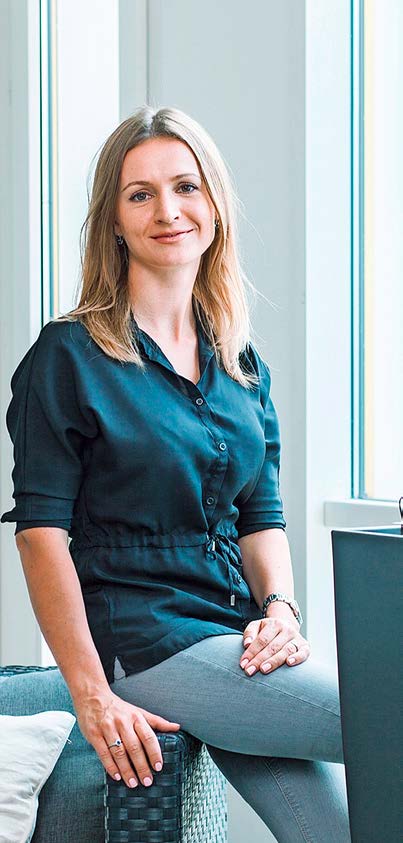
‘I’m an inquisitive person,’ says Olga Peters. And this curiosity has taken her far since her days of studying in-ternational economics in Kiev. After a spell in the US, she enrolled at the University of Zurich (UZH) Faculty of Business in 2009. There she met engineer Francesco Dell’Endice, with whom she founded QualySense, a company that develops grain sorting robots for the agriculture and food in-dustries. The company currently employs 35 people and expects to dou-ble its revenue this year. To fund its rapid growth, Peters is discussing a multimillion investment with potential backers over the coming weeks. But that’s not all: she is a coach for the women’s network Aspire and an ex-pert at Kickstart Accelerator. She also helped to form the UZH Alumni Entrepreneurs Chapter in June and will give birth to her second child in October. It helps to have a partner who is willing to put his family’s interests before his own. ‘My husband plays a very important role in my professional development,’ says Peters.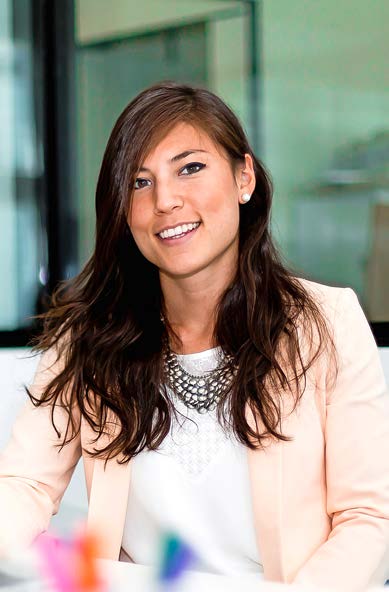
Déborah Heintze, COO of LUNAPHORE TECHNOLOGIES - Founded: 2014
TOP 100 Startups: 2014, 2015, 2016, 2017
After graduating in bioengineering at EPFL, Déborah Heintze spent a year working in research at the renowned Harvard-MIT Division of Health Sciences and Technology in the US. ‘Research is exciting, but converting the developments from the laborato-ry into practical applications and assisting their breakthrough in the market appeals even more to me,’ says Heintze. On her return to Switzerland, she worked for the technology transfer office of ETH Lausanne, which served as a stepping stone to starting her own business. The opportunity arose in 2014: together with Ata Tuna Ciftlik and Diego Gabriel Dupouy, she founded the EPFL spin-off Lunaphore. The startup has developed technology that can analyse the effectiveness of drugs on individual patients undergoing cancer treatment. Market entry is scheduled for as early as next year. Heintze is enjoying working for her own company, which now employs 20 staff. ‘Luckily, my friends and family make sure that I don’t become unso-cial from working too much,’ says the young entrepreneur with a smile. To reduce the stress that is sometimes in-evitable, she does a lot of sport.
TEXT: Journalistenbüro Niedermann