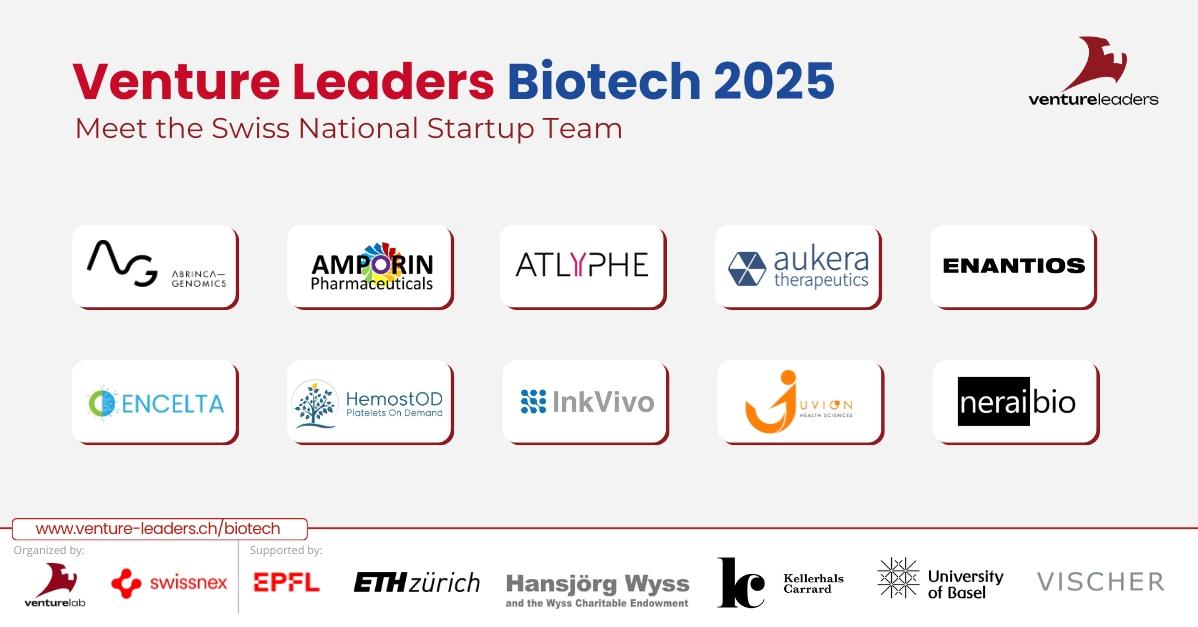
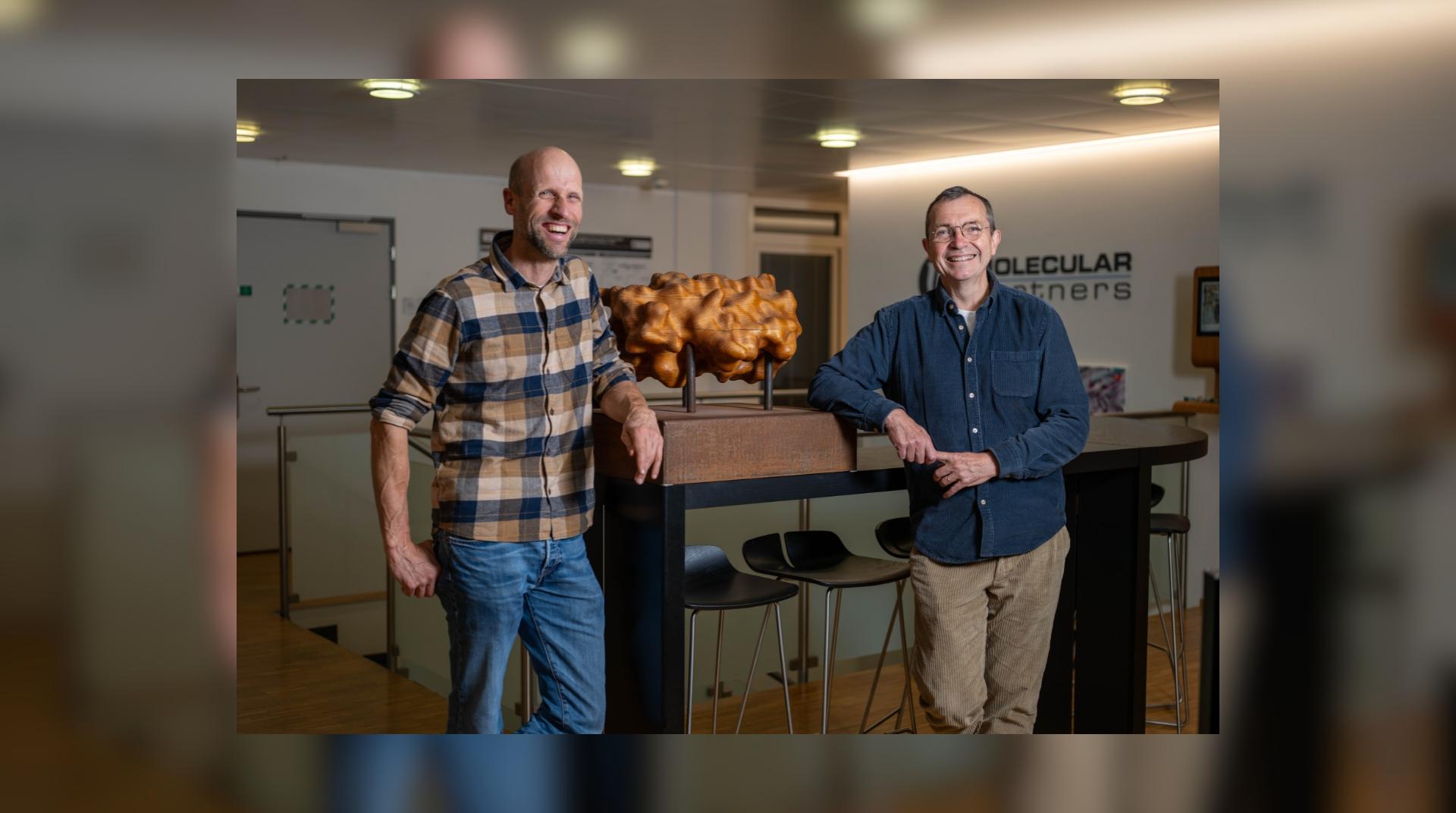
Twenty years after co-founding Molecular Partners (MP), Patrick Amstutz and Michael Stumpp reflect on building a company around a novel drug class—DARPin therapeutics—and guiding them through clinical development, industry partnerships, and public listing. With ten years now on the SIX Swiss Exchange, the two look back on key decisions, steady progress, and what it takes to develop new medicines in a highly competitive field.
 Founded in 2004 as a spin-off from the University of Zurich, Molecular Partners has spent two decades developing DARPin-based therapeutics designed to address complex medical needs with high precision. With programs advancing in oncology and radioligand therapy, and a track record that includes major industry collaborations and over 2,500 patients treated, the company has carved out a distinct position in the biotech landscape. As a Roadshow Partner of Venture Leaders Biotech, Molecular Partners also contributes to the broader startup ecosystem by sharing its experience with emerging founders. We spoke with CEO Patrick Amstutz and EVP Projects Michael Stumpp about lessons from the early days to the public markets, and how their company and DARPin drugs have evolved over time.
MP is celebrating 10 years on SIX and 20 years since its founding. Looking back, which moments had the biggest influence on how the company grew?
It has been quite a journey! In this time, we have treated over 2,500 patients globally with seven DARPin therapeutics and raised over CHF 800 million through investors and partners, including big pharma.
We could pick out a few important moments and achievements in the story of Molecular Partners to-date. In particular, we would acknowledge the continued support from our Swiss and international investors providing the capital to develop DARPin therapeutics - our custom-built protein drugs. We invented DARPins to move beyond the available therapeutic landscape; to treat medical problems not readily addressed by other drug modalities. Reinforcing our pioneering scientific spirit, we have brought together a talented team with a proven track record of drug and business development. We have worked with multiple high-profile pharma partners to drive development and established a strong financial base in current volatile markets.
"In biotech, resilience is essential,
and knowing when to halt a program
is as important as pushing forward."
We had two key clinical breakthroughs with DARPin therapeutics. The first was abicipar, an ophthalmology drug needing fewer injections than standard-of-care with similar efficacy. Abicipar in-licensed by Allergan (now Abbvie), was the first DARPin tested in patients, showed clear benefits, and completed global phase 3 trials. The second breakthrough came during the COVID-19 pandemic with ensovibep, a trispecific DARPin effective against all major variants and developed in record time. In-licensed by Novartis, ensovibep highlights the DARPin platform’s versatility and speed, and our team’s capabilities.
Our strategy has evolved by learning from both successes and setbacks. We focus on developing treatments for patients with high unmet needs, addressing biological challenges that other drugs can’t, and showing patient benefit early in clinical development, whether with partners or independently. Today, we use our Radio-DARPin platform and the next-generation Switch-DARPin immune engagers to deliver on our mission to create impactful cancer therapies.

How did listing on SIX and later Nasdaq enhance MP’s ability to connect with investors and secure funding for therapeutic development?
Both listings gave us crucial access to capital from a diverse group of investors, including specialized biotech funds in the US and Switzerland. Our 2014 SIX IPO allowed early private investors to exit and helped us expand our investor base on a respected exchange. These listings boosted our international visibility, stock liquidity, and a stable regulatory environment. The increased profile also sharpened our strategic focus and we’ve benefited from strong shareholder support.
 For those unfamiliar, how would you describe DARPins and their advantages in therapeutic drug design?
DARPin (Designed Ankyrin Repeat Protein) therapeutics are a new class of custom-built drugs derived from natural binding proteins that enable multi-functionality and multi-target specificity. Simply put, DARPins offer key advantages over existing protein-based therapies like antibodies or peptides due to their flexible structure, high affinity and specificity, small size, and stability. These properties allow DARPins to be tailored to specific diseases, and they have been clinically validated across several areas—including ophthalmology, virology, and oncology— and reached the registration stage.
"Our IPO on SIX enabled early investors
to achieve a public exit and broadened
our investor base on a respected exchange."
MP has treated over 2,500 patients with DARPin candidates like abicipar and ensovibep and received over CHF 450 million in milestone payments from partners, alongside CHF 400 million raised from investors. What are some of the key lessons from these clinical programs, especially overcoming challenges such as the Novartis partnership?
Change is the only constant. We’ve learned to adapt to unexpected outcomes and that we can bring DARPin candidates to patients within a year, as shown by abicipar and ensovibep.
Partnerships with Allergan/Abbvie and Novartis have been vital, providing clinical, design, manufacturing insights, and capital. Both we and Novartis took an important step in the defense of global health when we developed ensovibep. Our work was a success but the global demand for therapies against Covid had subsided, so we adjusted accordingly. It is worth noting that our collaboration with Novartis also revealed DARPins’ potential as vectors for radioactive therapies, leading to targeted alpha therapies developed with Orano Med.
These experiences have made us disciplined and strategic in choosing projects worth the scientific and financial investment, keeping us nimble and focused.
MP recently expanded its strategic partnership with Orano Med. How does this collaboration fit into MP’s broader innovation and business goals?
Radiopharmaceuticals fit our strategy to develop therapeutics for patients with high unmet need, leveraging DARPin unique features as potentially ideal vectors for radiopharmaceuticals. We want to demonstrate patient benefit early on in clinical development with our therapeutics and radiopharmaceuticals offer patients, physicians, and companies the benefit to “see what one treats” and to “treat what one sees”. Switzerland has been at the forefront of developing radiopharmaceuticals for a number of years, and we want to see that continue.
Through our strategic collaboration with Orano Med, we aim to become a leader in radiopharmaceuticals, advancing a pipeline of up to ten targeted alpha therapies. This partnership combines Molecular Partners’ DARPin expertise with Orano Med’s unique 212Pb supply, manufacturing, and clinical development capabilities. Our complementary skills and strong teamwork—highlighted by the expanded agreement earlier this year—reflect our belief that collaboration is key to overcoming medicine’s toughest challenges.
How have MP’s DARPin platforms evolved over the years, and what distinguishes the current pipeline?
We have developed eight clinical-stage DARPin candidates across multiple therapeutic areas, refining our expertise over 20 years and securing over 300 patents. Currently, we focus on two oncology modalities: Radio-DARPin Therapeutics (RDT), delivering radioactive payloads to solid tumors—with MP0712 entering clinical development through our partnership with Orano Med—and MP0533, a novel tetra-specific DARPin for acute myeloid leukemia. Additionally, our Switch-DARPin platform for next-generation T-cell engagers is in preclinical development.
"DARPins offer substantial advantages
over antibodies and peptides thanks to
their flexibility, high affinity, and stability."
What has building MP over two decades taught you about resilience, leadership, and maintaining a long-term vision?
The company has evolved significantly over these 20 years, but throughout we have always maintained the same vision: to address significant unmet medical needs with our DARPin candidates, offering tangible solutions for patients. This guiding star has helped us to maintain focus and underpinned progress, even when faced with obstacles.
Our team has been central in MP’s evolution and we can’t thank them enough. It’s been incredibly motivating and rewarding to be able to co-found the company with a group of dedicated friends (all Ph.D. students and Postdocs from the lab of Prof. Plückthun at UZH), which have imprinted the company with a culture still present today.
In biotech, resilience is essential, and knowing when to halt a program is as important as pushing forward. This mindset will be vital to our future success and ensure sustainability for the next 20 years.

MP team
Related articles
Molecular Partners: Pioneering Targeted Radiopharmaceuticals
read more
Venture Leaders Biotech 2025: Captain's blog by Kelvin Stott, Founder of Amporin
read more
Venture Leaders Biotech 2025 connects Swiss science with the US biotech market
read more
Apricot Therapeutics: The Venture Leader Biotech advancing data-driven drug discovery for targeted medicine
read more
Nerai Bioscience: The Venture Leader Biotech redefining genetic medicine
read more
HemostOD: The Venture Leader Biotech advancing ex vivo platelet manufacturing
read more
InkVivo: The Venture Leader Biotech enhancing drug delivery systems
read more
Encelta: The Venture Leader Biotech revolutionizing cell therapy
read more
Enantios: The Venture Leader Biotech innovating in chiral molecule analysis
read more
Aukera: The Venture Leader Biotech driving drug discovery
read more
Juvion Health Sciences: The Venture Leader Biotech shaping aging therapeutics
read more
Abrinca Genomics: The Venture Leader Biotech accelerating microbial genomics research
read more
Amporin: The Venture Leader Biotech tackling neurodegeneration
read more
Venture Leaders Biotech 2025 kick off at Swiss Biotech Day ahead of Boston roadshow
read more