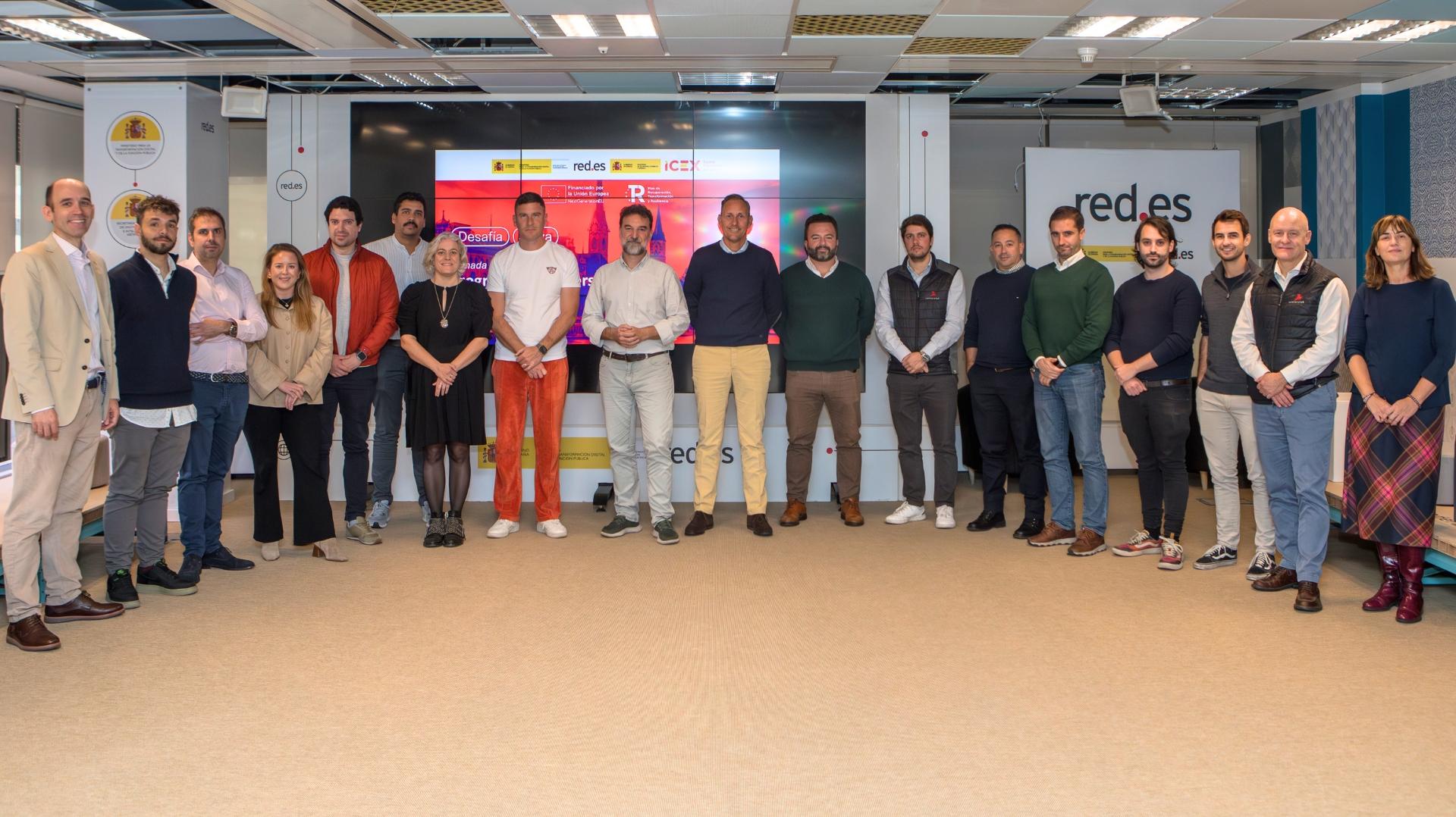
PlanetAI Space: the Desafía Program startup advancing natural capital

scroll south


Meet María Fernanda González, Co-Founder of Planetai Space. The sustainability-focused startup employs satellite technology and Quantum Machine Learning to address global water scarcity. In May, María Fernanda and the other nine Desafía Team members will participate in a two-week immersive business program across Zurich, Lausanne, and Bern to establish sustainable growth pathways in Switzerland's innovative ecosystem.
 María Fernanda González is a serial entrepreneur with over a decade of experience in deep-tech and AI. She holds a Ph.D. in Quantum Physics, a Master’s in Numerical Methods, and an MBA. Her expertise lies in Big Data and Machine Learning solutions for large corporations, driving 5-7% annual turnover growth. Since 2019, she has focused on AI for planetary well-being, founding Fregata Space, PlanetAI Space, and PlanetAI Nature Space, a non-profit certifying carbon credits. Her organizations use AI and remote sensing to monitor conservation, certify carbon credits, and assess pollution impacts. María Fernanda has secured international innovation grants from various governments and was invited to the U.S. Department of State's IVLP in 2013.
Can you tell us who your product or solution helps, and how?
Water scarcity impacts over 2.2 billion people, particularly indigenous communities, with irregular rainfall and limited aquifer data complicating access. Declining precipitation worsens water shortages and socio-economic challenges. The UN warns 700 million could be displaced by 2030, fueling resource conflicts. Cities like Los Cabos and Bogotá prioritize tourism over local needs. Our technology, QUANTUM-AQUA, is a Quantum Machine Learning algorithm using satellite technology to detect and prevent underground water depletion.
What market are you addressing and what is the potential of your startup in that market?
We are addressing the global water intelligence and management market, valued at USD 21.3 billion in 2023 and projected to exceed USD 36 billion by 2030 (CAGR ~8%). This market includes: Government agencies managing drought resilience and climate adaptation. Utilities and water authorities facing infrastructure stress and regulatory pressure. Climate tech firms and environmental services looking for high-resolution, predictive datasets. NGOs and development banks focused on water access, equity, and sustainability. Agri-business and extractive industries seeking ESG-compliant groundwater monitoring
What are your team’s key achievements to date?
We created the QuantumAqua Algorithm, a Quantum Machine Learning model (TRL 7/8) that detects underground water depletion using satellite data and geolocated well records. It combines multi-spectral and radar imagery to identify groundwater stress, including in the Amazon. We collaborate with Universidad de los Andes and Universidad Nacional de Colombia and support carbon and water credit certification. Recognized internationally, we are under evaluation for support from multilateral banks and global climate tech networks. In 2025, PlanetAI, behind QuantumAqua, was named one of UpLink’s Top Innovators.
What do you expect from Desafìa, and how will it help you achieve your vision?
The Desafía program will help us explore strategic opportunities across Europe by providing access to public innovation and climate resilience support, as well as a network of impact investors, venture capital, and corporate partners. Through this ecosystem, we aim to accelerate our go-to-market strategy, validate our solution in new regulatory environments, and engage with municipalities, utilities, and environmental agencies focused on groundwater protection and water equity. This support will position QUANTUM-AQUA as a European leader in satellite-driven, quantum-enhanced Natural capital intelligence.
Why does Switzerland represent a great opportunity for you?
Switzerland is a prime location for scaling QUANTUM-AQUA, offering leadership in climate innovation, hydrological research, and access to global capital. With institutions like the World Economic Forum, the Geneva Water Hub, and UN agencies focused on sustainable development, it serves as a hub for policy influence and collaboration in water resilience. As a financial center with expertise in impact investing and climate fintech, Switzerland provides access to mission-aligned capital. Renowned institutions like ETH Zürich and EPFL lead in applied science, satellite data, and quantum computing, aligning with our tech foundation. Additionally, Swiss utilities and municipalities are investing in water management systems, creating opportunities for pilot projects and partnerships.
Related articles
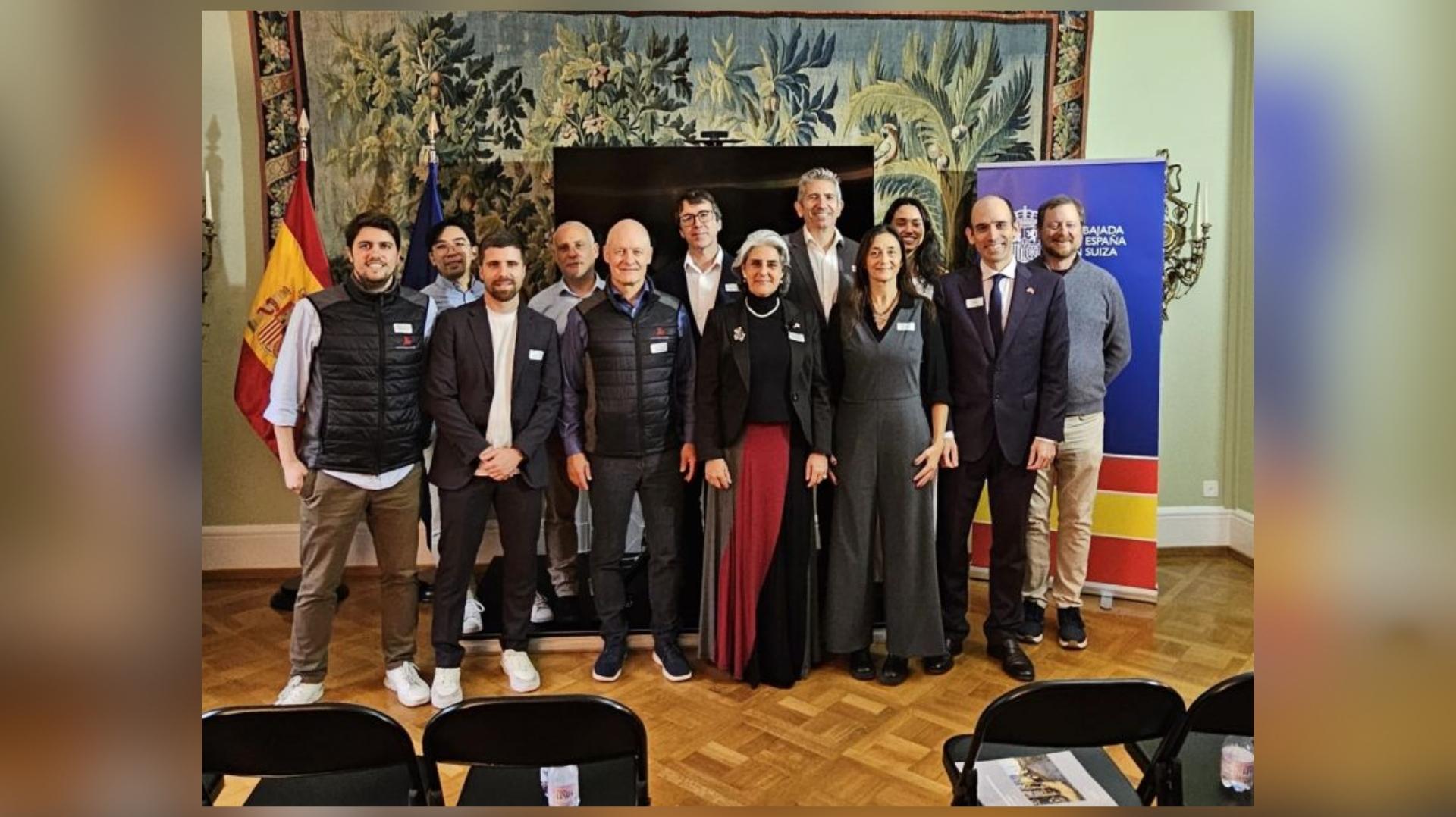
Desafía's Swiss second edition connects Spanish scaleups with growth opportunities
read more
eSignus: the Desafía Program startup making digital asset custody secure, accessible, and customizable
read more
Distinkt: the Desafía Program startup combating counterfeiting with nanotechnology
read more
Uncharted Therapeutics: the Desafía Program startup advancing drug discovery with generative AI
read more
Agrolinera: the Desafía Program startup reshaping dairy farming
read more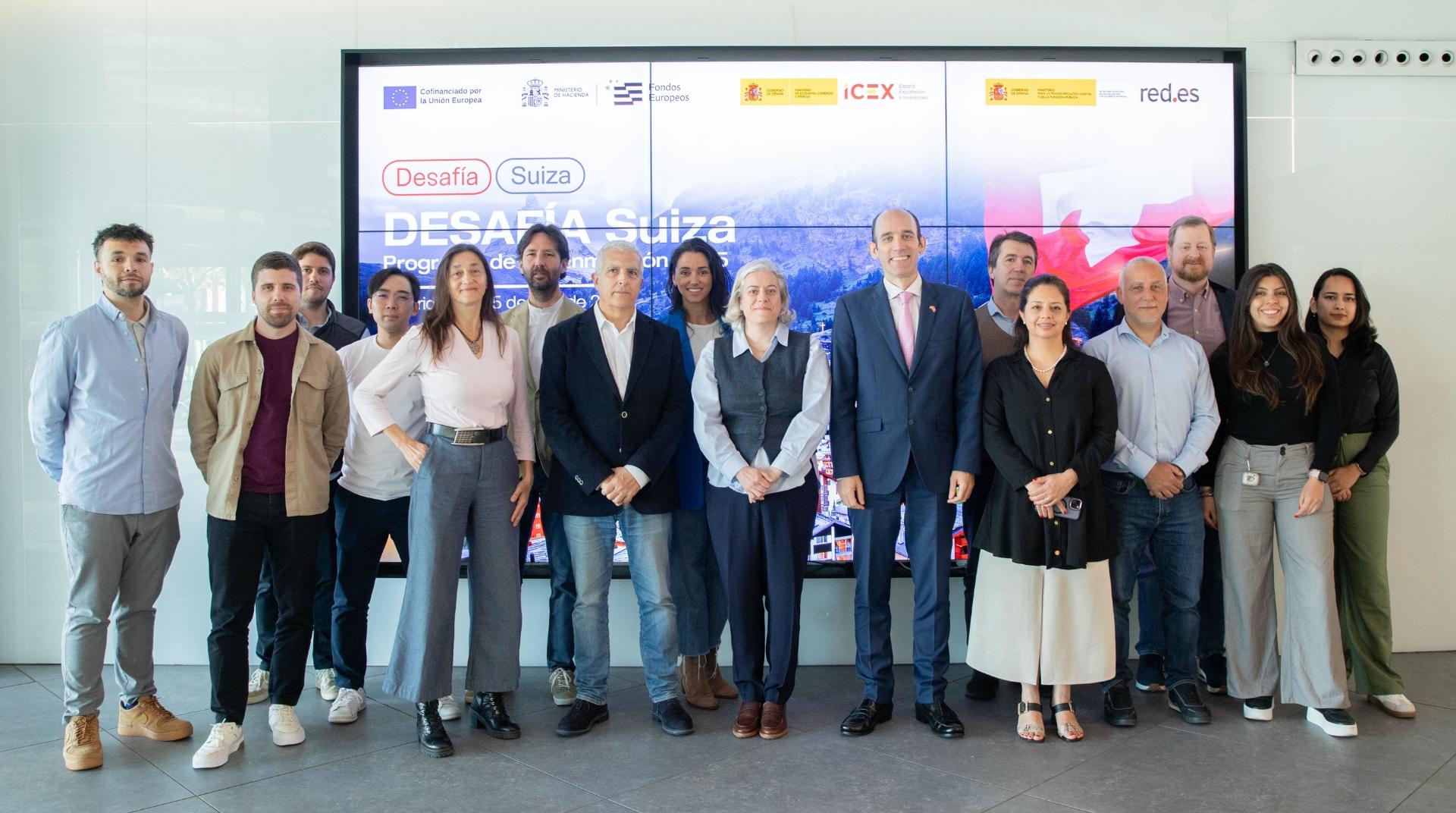
Desafía Switzerland 2025: Nine Spanish startups prepare for Swiss expansion
read more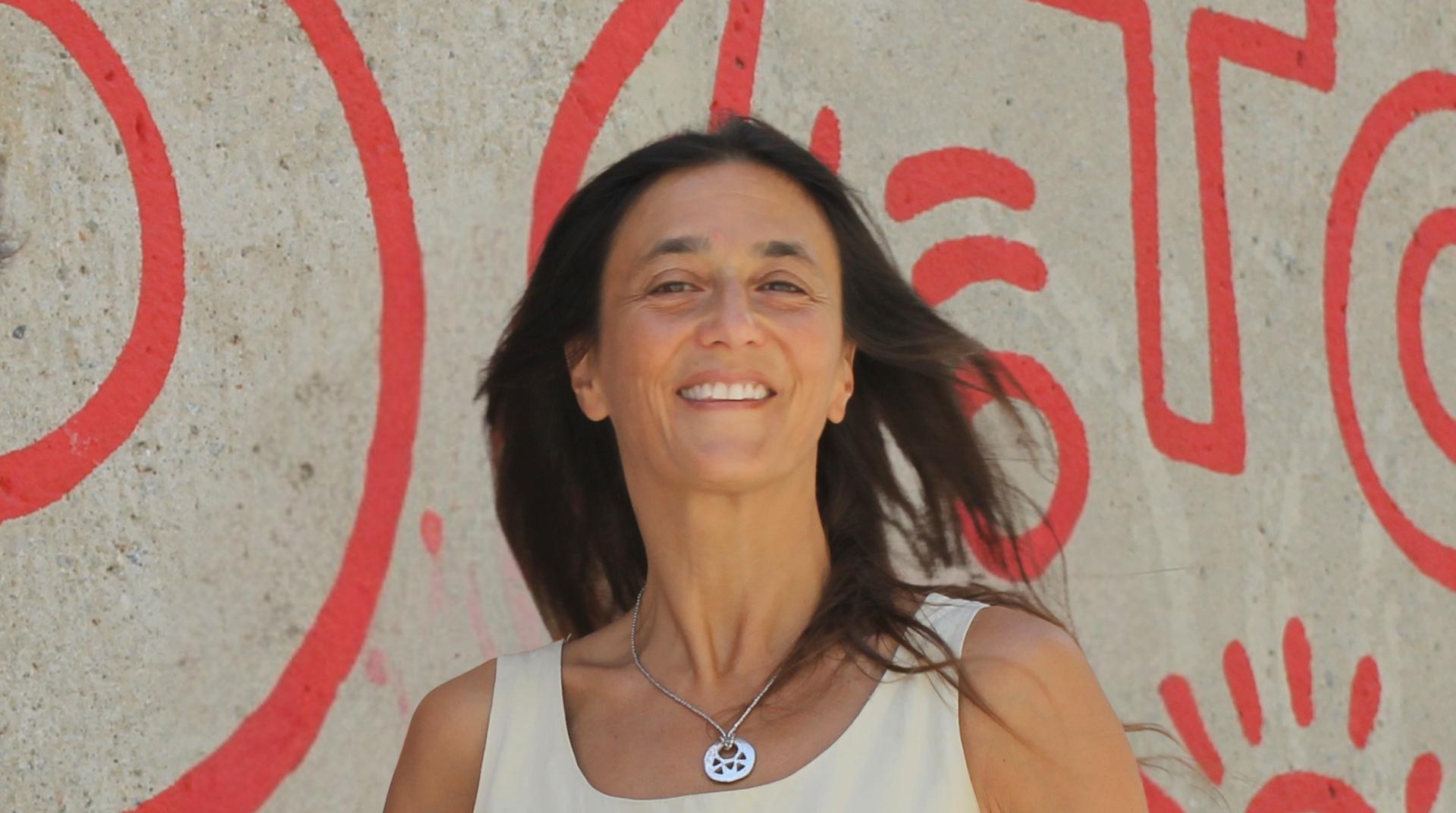
Revivack: the Desafía Program startup enabling circular economy solutions
read more
Verázial: the Desafía Program startup providing biometric access and e-signatures for pharma
read more
Woza: the Desafía Program startup building deep-tech foundations for global impact
read more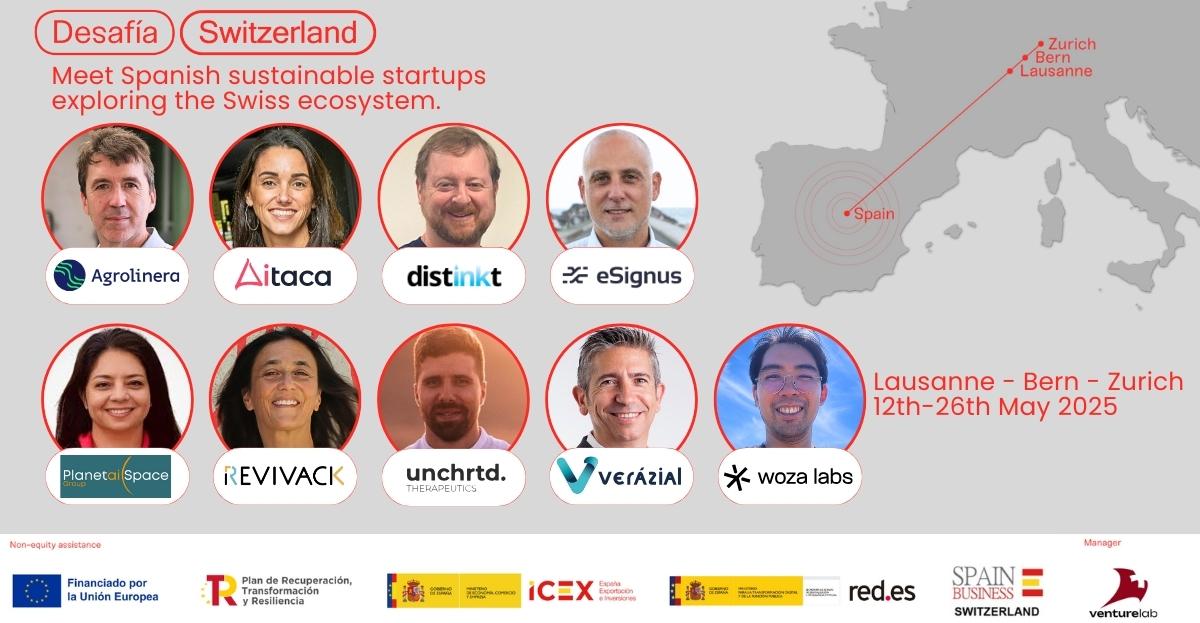
Nine innovative Spanish startups to join Desafía Switzerland Program in May – Events open for Swiss ecosystem to connect
read more