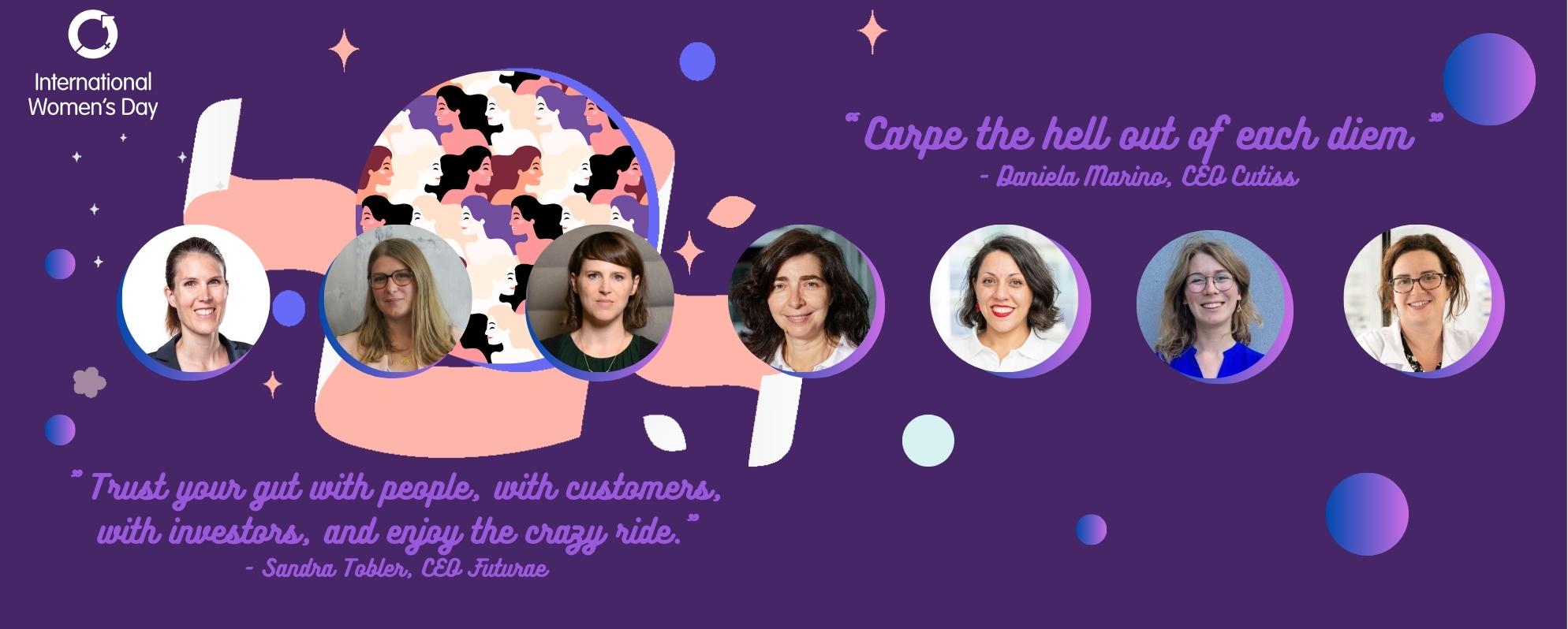
The venture capital industry has long been predominantly male-driven, but times are changing. As we approach International Women's Day (IWD) in 2025, it's clear that female entrepreneurs are pushing past barriers, running companies, and challenging norms. Despite facing specific obstacles—especially in raising capital—women continue to show resilience and leadership in ways that are influencing the startup landscape. But what does the road ahead look like? How can the VC ecosystem better support women entrepreneurs, and what changes do they hope to see? In conversations with several inspiring women calling the shots in the Swiss startup industry, we explore the challenges, opportunities, and lessons they've learned along the way.
Venture capital influences the startup landscape, yet access to funding remains uneven. Despite studies showing that female-founded startups often outperform their male counterparts, the proportion of venture capital allocated to women-led businesses remains disproportionately low. In Switzerland, initiatives such as Venture Kick, Venture Leaders, and Innosuisse's Female Entrepreneurship course aim to close this gap by equipping female founders with the resources and networks needed to scale their ventures.The founders featured in this article have benefited from these programs, leveraging their expertise to grow their startups. Their experiences reflect both the challenges and opportunities of female entrepreneurship in the venture capital ecosystem.
Entrepreneurship originates from a passion for solving problems, but for women in the VC industry, it also means overcoming an environment that has historically been skewed. When asked about their motivations, these female entrepreneurs shared a consistent theme: The desire to make a difference. "I didn’t plan to be an entrepreneur —I just wanted to solve a problem.
My passion for equitable healthcare pushed me to build the solution I wished existed," highlighted Danielle Ralic, Co-Founder of Ancora.ai. "I’ve always been driven to make an immediate impact — because, with today’s environmental challenges, action can’t wait," added Estelle Clerc, Founder of CellX Biosolutions.

Starting a business from scratch is no small feat, especially when challenges come not just from the market, but from the industry's very structure. The interviewees reflected on the uphill battle of building the confidence of investors and stakeholders.
"One fundraising challenge I faced was bias — women were asked about risks and sustainability, while men were asked about scaling and market dominance," said Clara Moldovan, Founder of Swistor. Andrada Muntean, Co-Founder of NovoViz, thinks that in many places, women face barriers to raising capital. She says she hasn’t faced overt bias, but rather felt pressure to prove their technology, sensing a credibility gap. For these entrepreneurs, leadership is about creating a path where none existed before—changing the definition of success for the next generation of founders.

Challenges and opportunities: Capital and confidence
One of the biggest challenges women face today is raising capital. Despite studies showing that female-founded startups often outperform their male counterparts, they still raise less money—a trend that has persisted for years. According to recent data, only about 2-3% of venture capital goes to female entrepreneurs. A study by Forbes suggests that startups founded by women are more likely to achieve profitability and generate higher returns, yet the funding gap persists. So, what's behind this discrepancy? "Women entrepreneurs face more scrutiny and limited funding access, with investors focused on risks over vision. But strong networks and rising diversity awareness are opening doors," emphasized Raja Prince, Founder of BLEEDnFIRE.
For Maria Van Dongen, Founder of Allegria Therapeutics, raising capital for unproven innovation is tough, but seeing women-led biotech succeed inspires and helps shift investor norms. The gap stems from investor bias, limited networks, and differing pitch evaluations. Most VCs are men, reinforcing the imbalance. Yet, female-led startups deliver strong returns. More diverse investors and better access to capital can help close the gap.
"Gender bias is the single biggest hurdle," pointed out Danielle Ralic. While this gender bias is a clear hurdle, the opportunities are undeniable. Women entrepreneurs are finding ways to leverage their networks, push for equity, and build companies that address gaps in the market. "Venture Kick gave us exposure, networks, and support. Programs like Feminno shaped our early strategy. Securing non-dilutive grants fueled our fast growth," underlined Estelle Clerc. "Switzerland supports women entrepreneurs with dedicated programs, accelerators, awards, and events that offer networks, mentorship, and visibility," mentioned Claudia Bigoni, Founder of SaiSir. With increasing awareness about gender biases, there is hope for the next generation of female founders. Yet, real change will require continuous effort from both investors and the broader industry.

Key takeaways: What needs to change
Looking ahead, many of these entrepreneurs hope for structural shifts in the VC ecosystem. One area they all agreed upon was the need for greater gender representation—not just among founders, but also within investment firms themselves. "Representation matters — showcasing women’s success in deep tech inspires others and normalizes their presence," expressed Claudia Bigoni.
 Lessons: Advice for aspiring entrepreneurs
These women's advice for aspiring entrepreneurs is simple and powerful: Be persistent, believe in your vision, and don't be afraid to challenge the status quo.
- "First-time entrepreneurs often delay launching, aiming for perfection. But the first version will never be flawless, and waiting means missed opportunities. Launch, gather feedback, and iterate quickly." Andrada Muntean
- "Build the right team, stay resilient, ask for what you need, and move fast to iterate and succeed." Clara Moldovan
- "Your ideas matter. Surround yourself with the right people, stay persistent, and don’t let doubt dictate your path." Raja Prince
For now, female entrepreneurs are securing funding, building companies, and setting new standards. The hope is that in the years ahead, their stories won’t be about overcoming barriers—they will simply be about building great businesses.
While challenges remain, female founders continue to raise capital and redefine industries. Their success highlights the importance of diverse leadership in venture capital and beyond. Currently, 30% of projects supported by Venture Kick have women in the founding team, while Innosuisse reported 29% female entrepreneurs in 2024, reflecting the ongoing need for stronger female representation in the startup ecosystem."